Last updated November 23, 2026
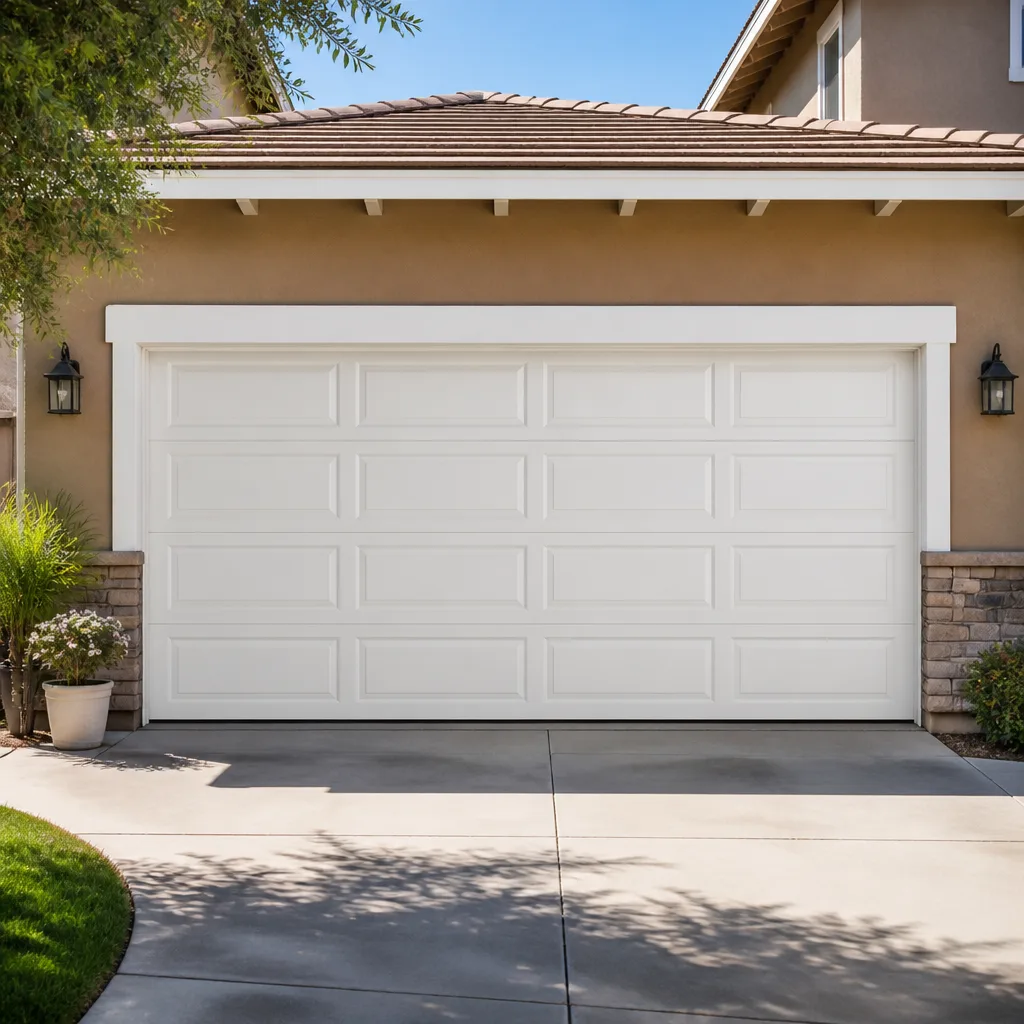 Raised-panel steel
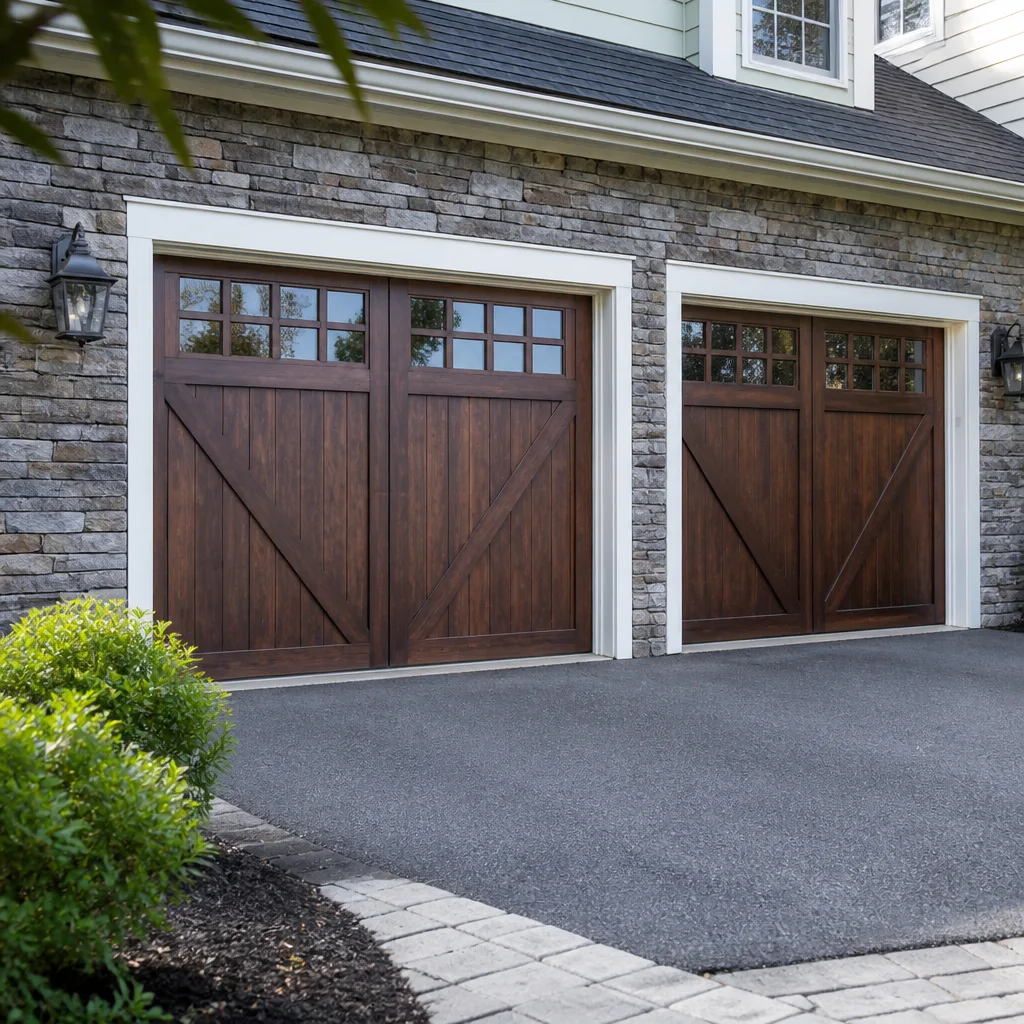 Carriage house
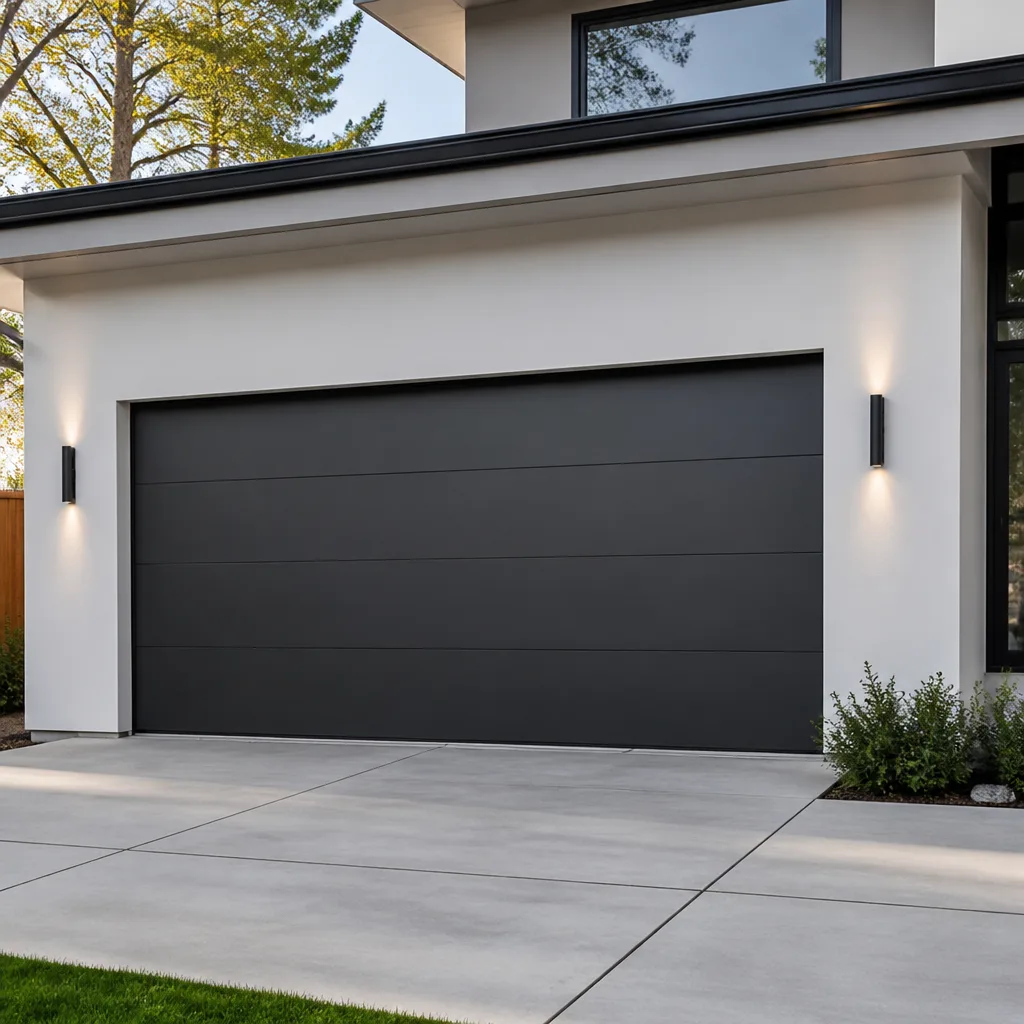 Modern flush
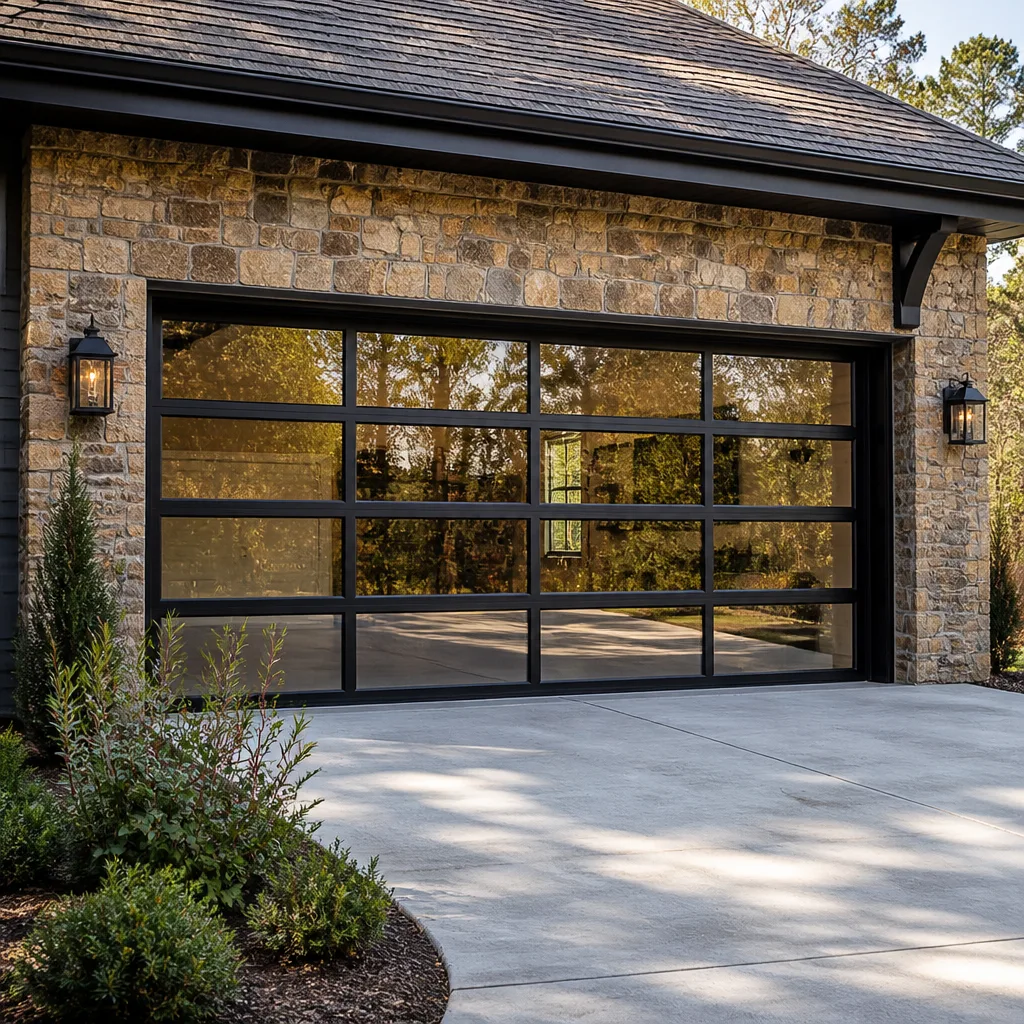 Full-view glass
 LiftMaster openers
 Chamberlain openers
Full 25-point door and opener safety check with every visit - springs, cables, rollers, tracks, and your LiftMaster or Chamberlain opener included
You get a price before we start. It does not change when the pro arrives.
Get your free estimateGarage Door Warning Signs: A Ballard Homeowner’s Reference Guide
A door that’s slightly slow to open is annoying. A door with a visibly bent torsion spring is a loaded mechanical device under thousands of pounds of torque that should not be operated at all. Those two problems can look equally “off” to a homeowner standing in the driveway, but they’re nowhere near the same category. One can wait for a scheduled visit. The other can put a person in the hospital. This guide does what most symptom checklists skip: it sorts every common warning sign into three urgency tiers so you know which ones mean stop using the door, which mean book a repair this week, and which mean watch and plan. We’ll also cover the sounds, the visual cues, and the Ballard-specific patterns that matter most.
Quick Answer
Most garage door warning signs fall into three tiers: stop using the door immediately (bent torsion spring, frayed or slack cable, door off its tracks, door reverses without obstruction), schedule a repair within the week (grinding or squealing rollers, opener straining, door drifting down on its own), and monitor and plan (minor rust, slight panel swelling, occasional rattles). Any sign involving springs, cables, or a door that won’t stay up belongs in the first tier, because those are the components that can injure someone. The rest deserve a timely call, not a panic one.
Styles & brands we work with
- Raised-panel steel
- Carriage house
- Modern flush
- Full-view glass
- LiftMaster openers
- Chamberlain openers
Table of Contents
- The Three-Tier Urgency System Every Ballard Homeowner Should Know
- Sound-Based Diagnosis: What Each Noise Tells You
- Visual Inspection: Springs, Cables, and Tracks
- Opener Behavior Patterns: Electrical vs. Mechanical vs. Sensor
- How Ballard Humidity Leaves Warning Signs That Look Cosmetic
- Seasonal Patterns in Ballard’s Older Housing Stock
- A Numbered Home Inspection Routine You Can Do Yourself
The Three-Tier Urgency System Every Ballard Homeowner Should Know
Not every symptom deserves the same response, and treating them all as emergencies is just as bad as ignoring them. Here’s how we sort the most common garage door warning signs, in Ballard and everywhere else.
Tier 1: Stop Using the Door Immediately
These are hazards. Do not open or close the door until a technician has looked at it.
- A visibly bent, twisted, or separated torsion spring, or a torsion spring with an obvious gap where the coil has unwound. A torsion spring stores enormous rotational force. Release that force the wrong way and it can cause serious injury.
- Frayed, kinked, or slack lift cables. A snapped cable can whip.
- The door is off its horizontal track or the rollers are popped out of the channel.
- The door reverses when it meets no obstruction, and the safety sensors don’t fix it.
- The door falls closed fast when you try to raise it, or won’t stay up at all.
Tier 2: Schedule a Repair Within the Week
The door may still operate, but these signs get worse and lead to tier 1 failures.
- Loud grinding, squealing, or popping during travel
- The opener strains or strains audibly on the lift
- The door drifts or sags when the opener releases
- A remote or keypad that works intermittently
- Rollers that are flat-spotted, cracked, or wobbly
Tier 3: Monitor and Plan
Not urgent, but worth noting and handling on a scheduled routine visit.
- Occasional light rattles on the way down
- Minor rust spotting or a small amount of bottom-section swelling
- Weatherstrip that’s starting to gap
- Awkward but consistent opener behavior that hasn’t changed
- Small seasonal creaks that appear only in wet months
When in doubt, describe the symptom over the phone and ask us to sort it. Our technicians have up to 10 years of experience reading these signs, and a short call is enough to place most issues into the right tier.
Sound-Based Diagnosis: What Each Noise Tells You
The noise is often more informative than the look. If your door sounds different this week than last week, open your phone’s voice memo and record one cycle. You’ll be able to describe the noise accurately, and that short recording is genuinely useful when you reach out for garage door repair.
Worn Rollers: A Steady Grumble or Rumble
A worn steel or nylon roller produces a rolling rumble that gets worse the slower the door moves. It’s constant, low-pitched, and it seems to come from inside the tracks. It often starts on one side and spreads. Rollers are inexpensive, and catching this early is one of the cheaper fixes on a garage door.
Cable Slap: A Snapping or Whipping Sound
A single, sharp snap or a whip-crack noise on one side is a cable problem. Lift cables run under tension from the bottom bracket up to the drum on the torsion shaft, and once a strand frays, it makes a distinct cracking sound as the door travels. Stop operating the door and treat it as tier 1.
Spring Stress: Pinging, Twanging, or a Loud Bang
A torsion spring that’s starting to fail makes a pinging or twanging noise as the coil binds. A spring that has snapped typically announced itself with a single loud bang – often loud enough for a neighbor to hear it. A spring that hasn’t yet failed but is stressed may ping repeatedly. Either way, stop using the door and don’t attempt to wind, unwind, or adjust the spring yourself.
Opener Gear Strip: A Rhythmic Clicking or Grinding from the Motor Housing
If the sound comes from the ceiling-mounted opener head, not the door, and it’s a rhythmic clack, click, or grind that correlates with the door moving slowly or not at all, the nylon drive gear inside the opener is likely stripped. This is a mechanical opener problem, not a door problem, and the fix usually sits inside the opener. See our garage door opener repair page for how that gets diagnosed.
Track Contact: A Scrape or Metal-on-Metal Rub
A dragging scrape that only happens on one side usually means a bent vertical or horizontal track, a loose hinge plate, or a roller that’s riding crooked. Don’t try to force the door through it – a bent track can trap the door in the opening or send a roller out of the channel.
Visual Inspection: Springs, Cables, and Tracks
Look with your eyes, not your hands, and don’t reach up and touch a spring or cable to check it. Torsion springs are under constant torsion even when the door is closed, and lift cables are under tension whenever the door isn’t fully down. Visual inspection is safe. Mechanical fiddling is not.
Torsion Springs
A healthy torsion spring is a clean coil with even spacing between the windings and no visible gaps. What to look for as a warning sign:
- A gap of an inch or more somewhere along the coil – the spring has unwound and is no longer functional
- A bend or kink where the spring is no longer straight
- A visible crack or a piece of the coil that looks displaced
- Rust pitting concentrated along the coil, which stresses the metal internally
One important Ballard-specific note: many homes in Ballard, especially around the older blocks near the Ballard Locks and the cottages tucked behind Market Street, use extension springs rather than torsion springs. Extension springs sit above the horizontal tracks and stretch alongside the door rather than winding on a shaft. If you see a spring that stretches with a cable down the middle and attaches to a bracket near the rear of the track, that’s an extension spring. Extension spring failure is why safety cables are recommended along the length of each extension spring – the cable contains the spring if it snaps.
Lift Cables
Lift cables are the braided steel lines that run from the bottom corner brackets up to the drums. Warning signs include:
- Fraying – individual strands sticking out from the braid
- A kink or a birdcage (the cable twisted into itself)
- Slack on one side while the other side is tight
- Visible rust on the cable itself
Tracks
Lay a straight edge or sight down each track from the outside. Both vertical and horizontal tracks should be straight and parallel. Warning signs:
- A visible bend or kink, especially near the transition from vertical to horizontal
- Misaligned horizontal tracks – one higher than the other
- Loose track brackets or bolts
- Rollers out of the channel or replaced with a mismatched size
Opener Behavior Patterns: Electrical vs. Mechanical vs. Sensor
Opener glitches are the most frequently mislabeled symptom in garage door service. When the door won’t open, most people assume the opener is dead. Usually it isn’t. Here’s how to tell which of the three problem families you’re actually looking at.
Electrical Signals
- Nothing happens at all when you press the wall button – no sound, no light blink, no motor click
- The opener works from the wall button but not from the remote
- A remote that works only from close range, or only intermittently
- Repeated tripping of the breaker or GFCI feeding the opener
Electrical symptoms usually point to the outlet, the wiring in the wall, the battery in the remote, or the logic board. Verify the outlet first, then the remote battery, then call us. We work on the full opener lineup, including the LiftMaster and Chamberlain/myQ lines, plus legacy Craftsman and Genie systems. No brand swap is needed just because your unit is older.
Mechanical Signals
- You hear the motor running but the door doesn’t move
- Rhythmic clicking from inside the opener head, with the door barely creeping
- The opener runs, the door opens a foot, then reverses
- The chain or belt looks slack, or sits noticeably loose on the rail
Motor runs + door doesn’t move usually means a stripped drive gear or a broken trolley. This is the most common mechanical failure we see on Genie and older Craftsman units in Ballard.
Sensor Signals
- The door closes a few inches and reverses, every time
- The opener light flashes when you try to close the door
- The door closes fine when you hold the wall button
- Sensors that are misaligned, dirty, or knocked out of their brackets
Sensor issues are the most common false-alarm opener call. Look at both sensors at the bottom of each track. Each should have a small LED that’s on and steady. If one is blinking or dark, that’s the sensor talking. Clean the lens with a soft cloth, check the alignment, and if the light is still off, book a technician.
How Ballard Humidity Leaves Warning Signs That Look Cosmetic
Ballard’s climate is wet for much of the year, and that moisture leaves marks on a garage door that look superficial but usually aren’t. The two most commonly misread signs are rust bleed and bottom-panel swelling.
Rust Bleed on the Panel Edges
Rust that appears as a thin orange line along a panel seam or around a hinge screw is often not just cosmetic. On a steel door – a Clopay or Amarr steel door, for example – the seam is where the factory coating is thinnest, and that’s where moisture gets under the paint. Once the rust starts to bubble the paint from the inside, the metal under the finish is thinning. If it’s just dust-colored surface rust on top of the paint, it’s cosmetic. If the paint is lifting and the metal underneath is pitted, that panel is on a path to needing replacement. Inspect the bottom edges of each panel, both inside and out, once a month during the wet months. A quick wipe with a dry cloth is enough; scrubbing won’t fix what’s already under the paint.
Bottom Section Swelling
Wood, composite, and some steel-backed doors in Ballard often show the first sign of moisture trouble at the bottom section, because it’s the piece closest to the slab and it takes the splash. What to look for:
- The bottom panel feels thicker or wider at one end than the rest
- The paint is lifting along the bottom rail
- The bottom seal has gone stiff and is no longer making contact
- A gap has opened between the bottom panel and the second panel
Swelling that’s no bigger than the width of a coin is usually a weatherstrip replacement and a repaint. Swelling that distorts the bottom edge of the panel can bind the door in the frame. That’s not cosmetic; it turns into a tier 2 repair because a binding bottom section will eventually wear the tracks and the opener.
Weatherstrip and Bottom Seal Gaps
When the bottom seal goes stiff, the door loses its seal at the floor. You’ll feel a draft, or you’ll notice daylight at the bottom. In Ballard, that gap is a direct path for moisture into the door’s bottom rail, which accelerates the swelling described above. Weatherstrip is a small repair that prevents a large one.
Seasonal Patterns in Ballard’s Older Housing Stock
Ballard has one of the widest ranges of garage ages in Seattle. A garage built for a 1920s bungalow near Salmon Bay may sit next to a 2010s townhome garage less than a hundred feet away. Different vintages fail in different patterns, and each one is worth knowing.
Older Detached Garages
Detached garages built pre-war or in the mid-century decades tend to have wooden framing that moves with the seasons. The opening itself flexes by a fraction of an inch between wet and dry seasons, which twists the tracks slightly. Symptoms you’ll see in these garages:
- Seasonal binding that appears in the fall and settles in early summer
- Track alignment that needs adjusting more than once
- Old extension springs that have been there through many seasons
- Worn bushings and hinges at the opening
An older Wayne Dalton door on a detached garage may have a “torque tube” style spring system built into the header rather than a standard torsion setup. Those are serviced differently, and it’s worth mentioning your door’s brand when you call so the technician arrives prepared.
Newer Attached Garages and Townhomes
Newer construction usually has tighter tolerances and T-style steel doors. In these, the failure pattern is more often opener-driven and opener-gear-driven, especially on LiftMaster and Chamberlain units that have run ten or more years on the same motor. Sensors with a plastic bracket tend to drift out of alignment after a knock more easily than older metal ones.
Rain-Season Patterns
Expect to see a cluster of warnings in November and March: rust bleeding at the bottom, swollen bottom sections, weatherstrip going stiff, and slightly louder door operation as the wooden frame flexes through its wet range. That’s not decay; it’s seasonal. Handle it with an inspection and a light tune-up, and none of it becomes structural.
A Numbered Home Inspection Routine You Can Do Yourself
Run this once a month. It takes under ten minutes, and it catches most problems while they’re still small.
- Stand back and look. With the door closed, sight up each side of the frame. The gap should be consistent from the top of the door to the bottom.
- Check the spring visually. Torsion spring: look for a gap along the coil, a bend, or cracks. Extension springs: look for a safety cable running through the middle and check for rust pitting on the spring itself.
- Check the cables. Look for fraying, kinks, or slack on either side. Do not touch them.
- Open and close the door one cycle. Listen for any new sounds. A small motor hum is normal; a rhythmic click, grind, or scrape is not.
- Test the auto-reverse. Place a small box or a board in the path and close the door. It should reverse on contact. Test the safety sensors by passing an object in front of the sensor beam – the door should not close.
- Check the bottom seal. From inside with the door closed, run a hand slowly around the perimeter. You should feel little to no draft.
- Look at the opener. Check the light flashes and the door behavior from wall button, remote, and keypad. Note anything that behaves differently from the others.
- Walk the tracks. Sight down both horizontal tracks from outside. They should be straight and parallel, with no visible bend.
- Photograph anything odd. A phone photo of the spring, the tracks, or the opener head helps a technician plan the visit and tells you whether the issue is worsening.
If your inspection turns up a problem you want to handle on a schedule, our garage door installation page covers what a replacement job looks like when the door itself is past its useful life. If the problem is fixable, repair is almost always the better call.
Common Mistakes to Avoid
- Assuming every noise is normal. A door that sounds the same this week as last week is fine. A door that has developed a new sound in the last few weeks is not. Note what changed and when.
- Giving the spring a nudge to “check” it. A torsion spring stores enough energy to injure a person badly even when the door is closed. Visual check only.
- Spraying lubricant on a stuck cable or a bent track. Lubricant on a fraying cable can hide the strand damage and make the failure harder to spot. Lubricant on a bent track does nothing about the bend.
- Assuming an opener problem means a new opener. Stripped gears, dead sensors, and worn trolleys account for the majority of opener service calls, and each one is a parts repair. A full replacement is only needed when the motor or logic board is truly dead.
- Ignoring rust bleed because it looks cosmetic. In Ballard, a thin orange line along a panel seam is often the first sign that moisture is under the finish. Catch it early and it’s a repaint. Let it go and it’s a panel.
- Letting the bottom seal go. A stiff weatherstrip on a Ballard garage lets moisture into the bottom rail all wet season. That seal is a small repair that protects the panel above it.
- Replacing the whole door when the problem is the opener. If the panels are straight and the springs are healthy, a noisy door with a struggling opener usually needs the opener serviced, not the door. Look at Garage Door Repair Ballard and the diagnostic steps above before assuming a replacement is needed.
See the difference
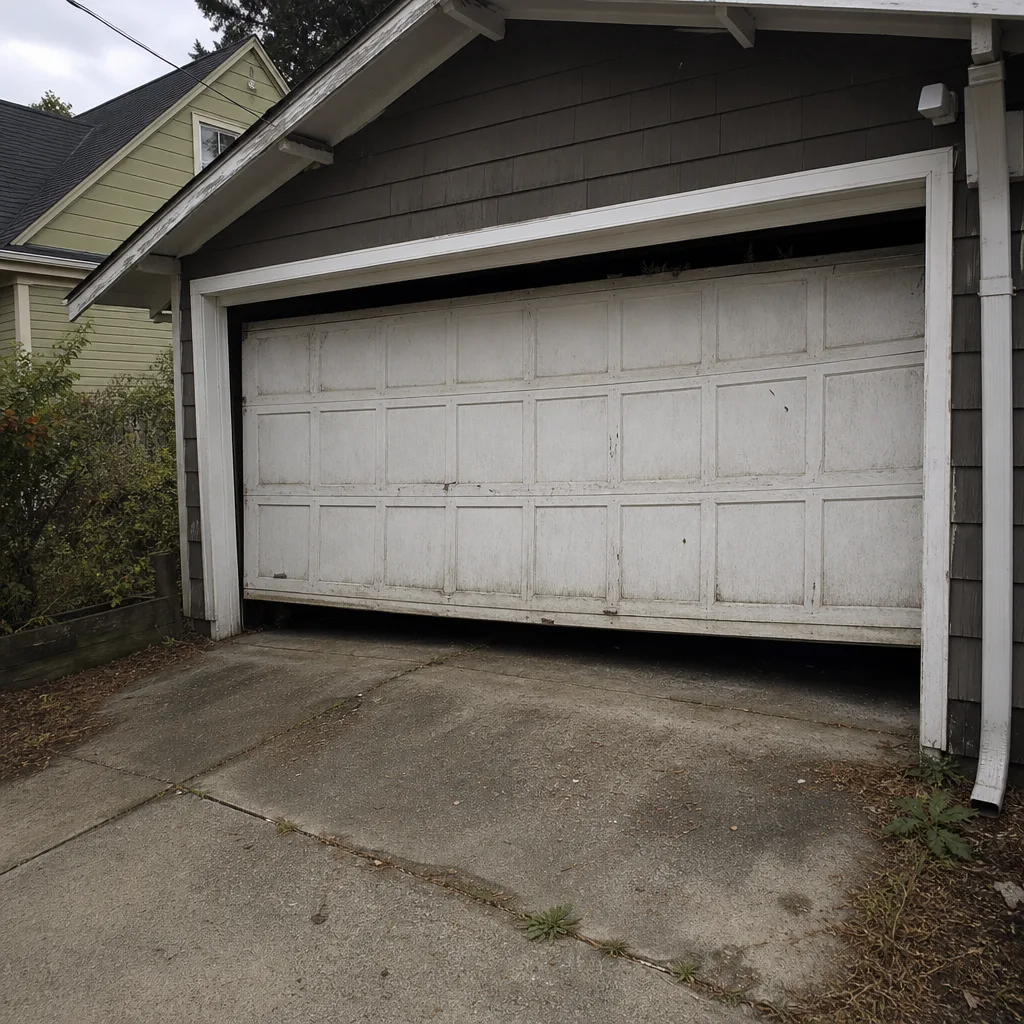 Before
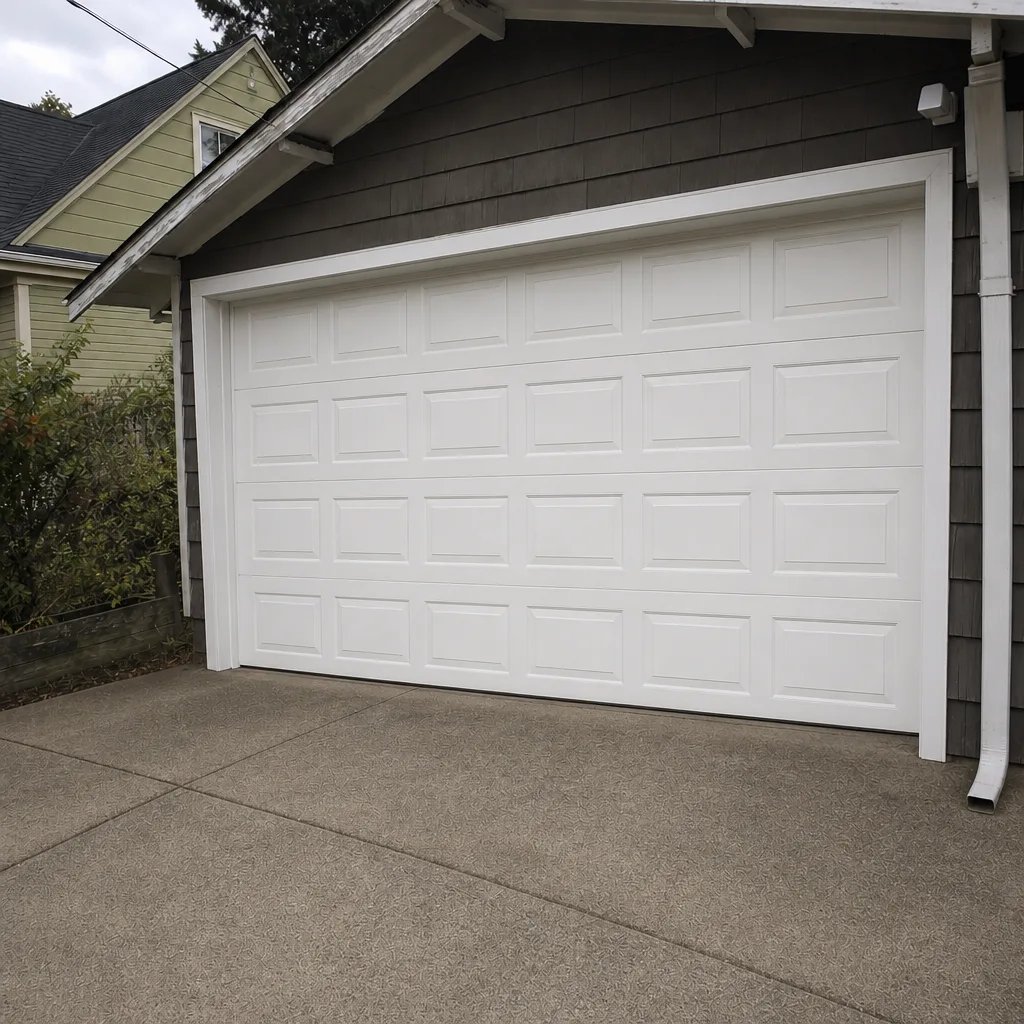 After
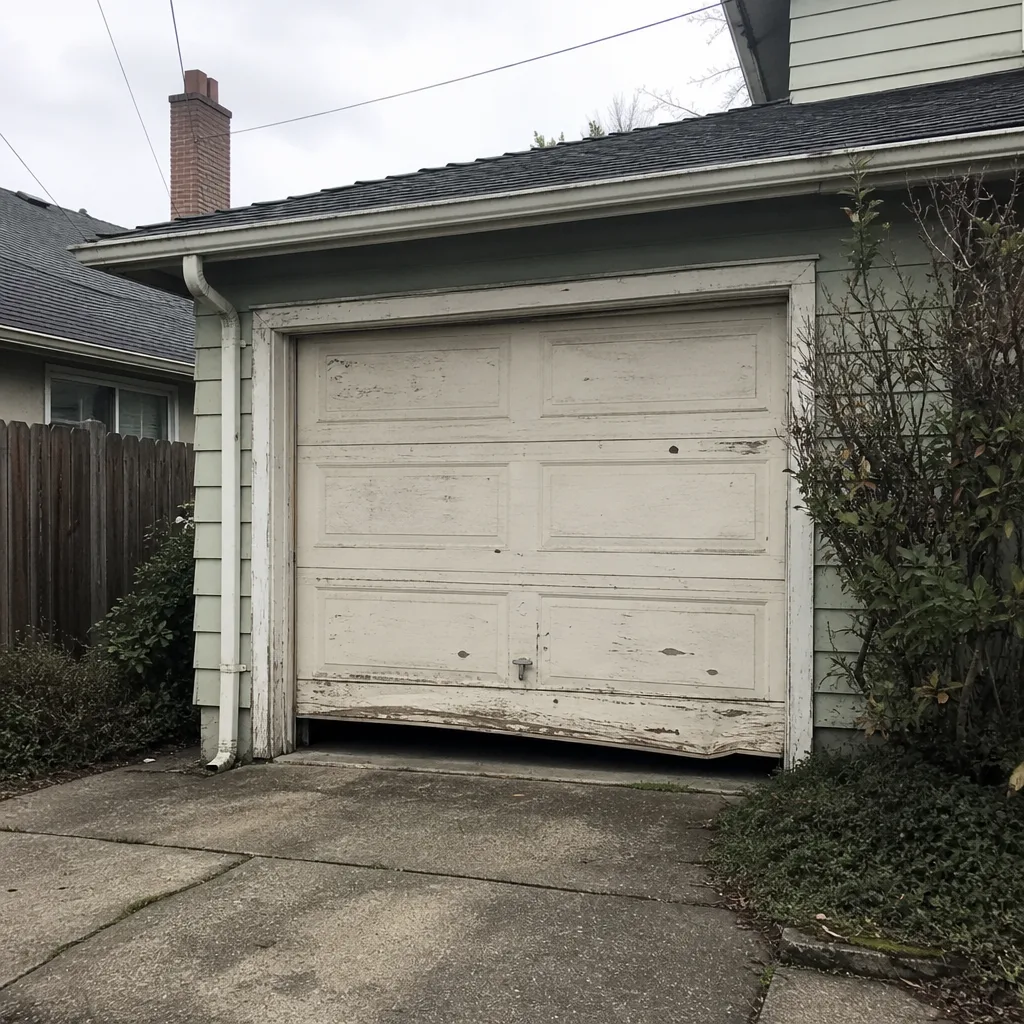 Before
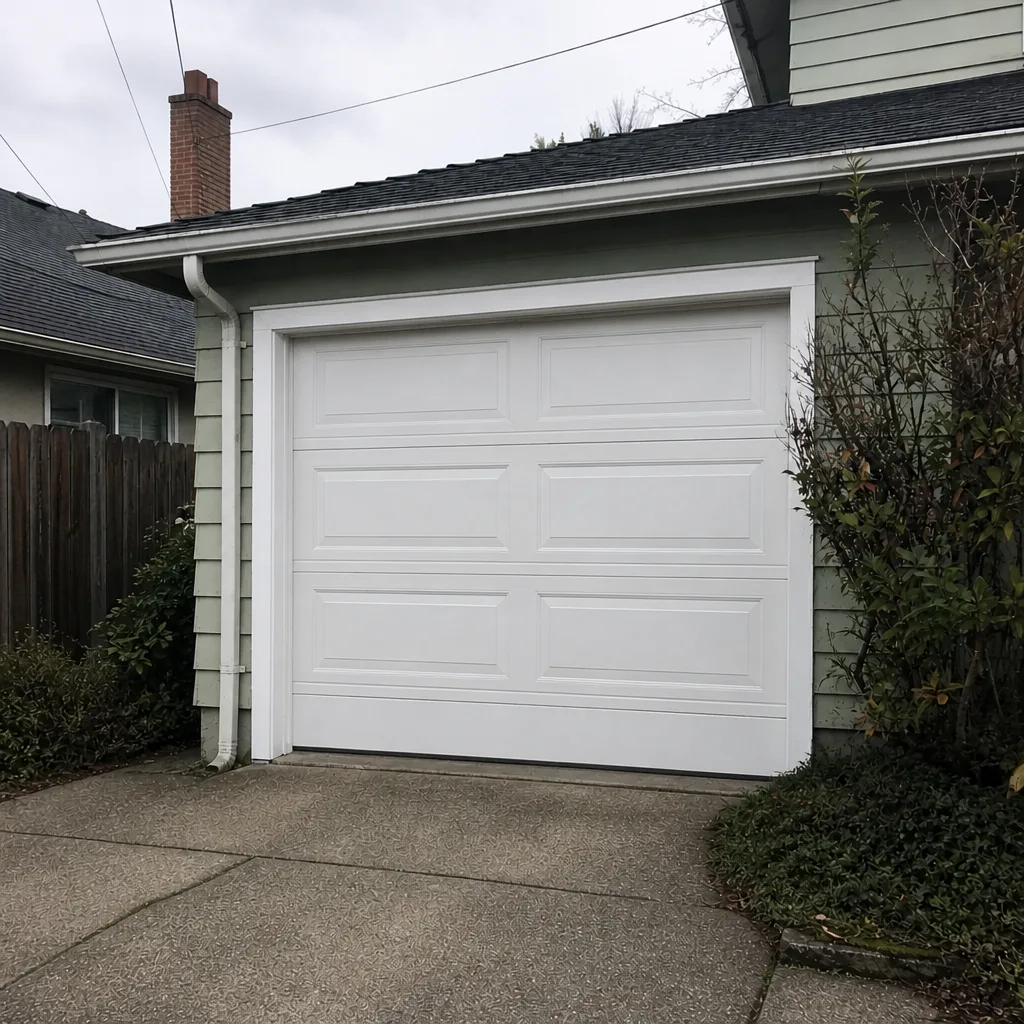 After
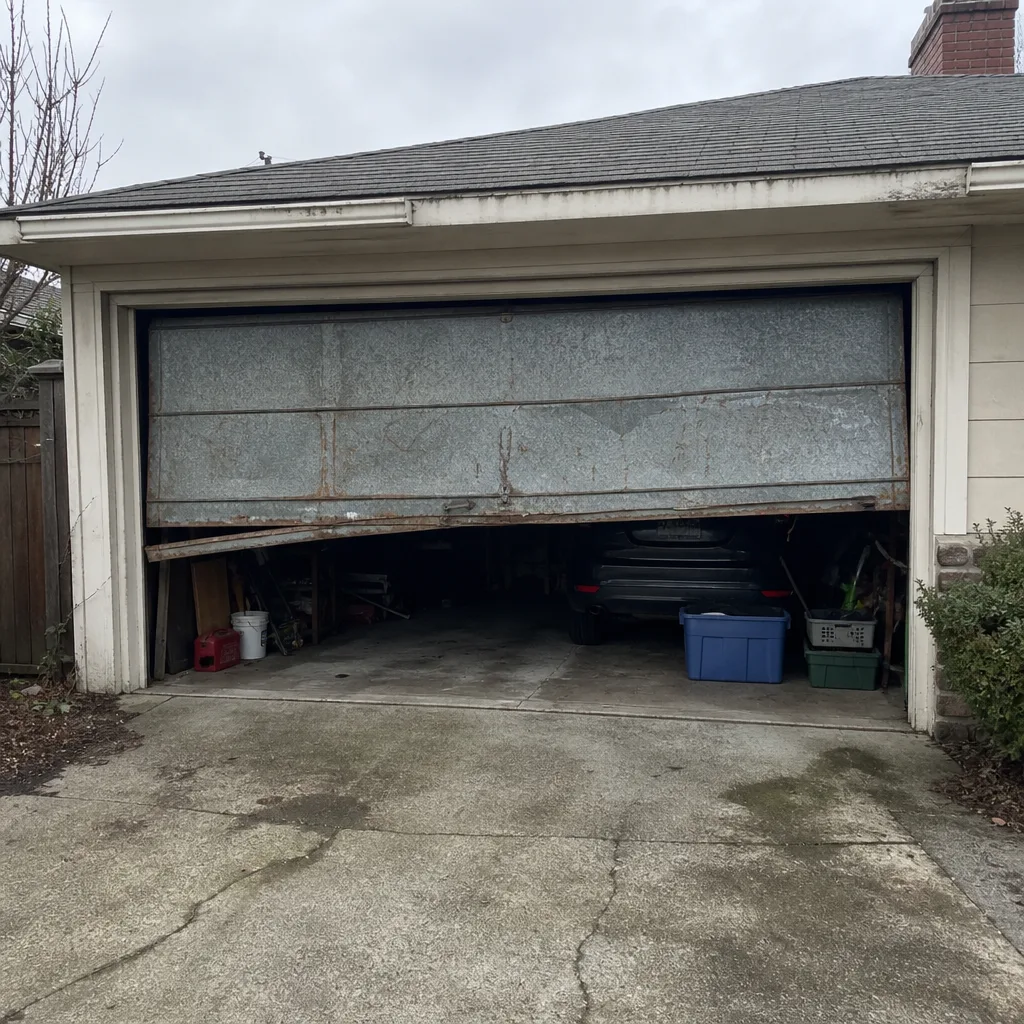 Before
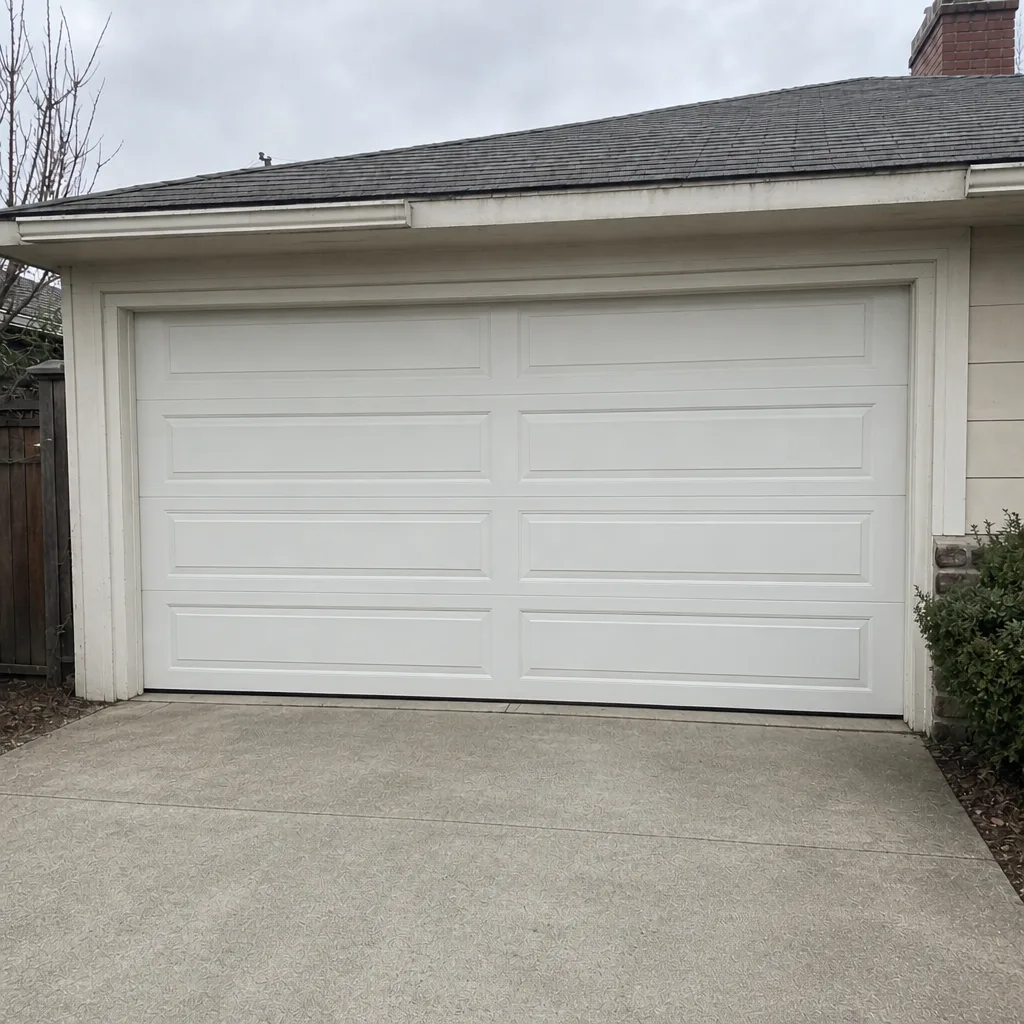 After
When to Call a Professional
Call a garage door technician the same day you find any tier 1 symptom, especially a bent torsion spring, a frayed or slack lift cable, a door off its tracks, or a door that reverses without obstruction. Call within the week for grinding rollers, a straining opener, or a door that drifts down on its own. If you’ve run the monthly inspection above and something has changed but you can’t place it, describe it over the phone. We work on the major brand lineup on your door as it stands – Genie, Clopay, Amarr, Wayne Dalton and the rest – so we don’t push a brand swap when your unit just needs a repair. Garage Door Repair Ballard offers free estimates in Ballard. Call (866) 937-8805 and we’ll help you sort the symptom into the right urgency tier and get you a written price before any work starts.
Frequently Asked Questions
A torsion spring that’s about to fail often shows a visible gap along the coil, a bend, or cracks in the metal, and sounds a pinging or twanging noise as the door opens. Look for a straight gap of an inch or more somewhere along the coil, or a coil that no longer sits evenly along the shaft. Don’t touch it to check. Photograph it and call us to have it assessed – a technician can tell within a minute whether it’s stressed. Call (866) 937-8805 for a free estimate.
A door that reverses without hitting anything is a sensor problem about 90% of the time. The safety sensors at the bottom of each track project an infrared beam across the opening; if the beam is broken, misaligned, dirty, or the sensor’s LED is blinking, the opener reverses as a safety measure. Clean both sensor lenses, check that each has a steady LED, and verify nothing is in the beam path. If the door still reverses, it’s time for a technician to trace the sensor wiring or the logic board. Call (866) 937-8805 for a diagnostic visit.
Most Ballard garage door repairs run from around $150 for a single worn part to $600 or more for a spring replacement or opener gear rebuild, and the written estimate is the price you pay. The final number depends on the part and how much disassembly is needed, which is why we quote per job rather than per hour. You’ll see the exact scope and price in writing before the technician begins. Call (866) 937-8805 and we’ll walk you through typical pricing for your symptom – estimates are free.
Surface rust that sits on top of the paint is safe, but rust that’s bubbling the paint from underneath or pitting the metal is a sign the panel is weakening. Steel doors in Ballard see enough wet weather that rust finds the panel seams faster than in drier climates. If the paint is lifting and you can feel pitting with a fingernail, book a technician to assess. If it’s only dust-colored surface rust, wipe it clean and keep an eye on it. Call (866) 937-8805 for a free estimate if you’re unsure which one you’re looking at.
No, an opener won’t fix itself. Intermittent failure is a real signal. When an opener works one day and not the next, it’s usually the early stage of a stripped gear, a worn trolley, a failing logic board, or a loose sensor connection. Catching an intermittent fault early saves a full teardown later. Call (866) 937-8805 and describe the pattern – which button works, when, and what the light does – and we can usually narrow it down on the phone.
Most garage door replacements in Ballard need a permit, and we recommend you call the city’s building department to confirm the current requirements for your address before scheduling work. The permit is usually applied for before the door is ordered, so it’s worth confirming that step early. Our team can walk the job through to a written scope, but we don’t handle the permit on your behalf. Call (866) 937-8805 with questions about the work itself and your free estimate.
The Bottom Line
Garage door warning signs are not all equal, and the biggest single mistake a Ballard homeowner can make is treating every symptom as either an emergency or a non-event. Sort what you see and hear into the three tiers. Stop the door for bent springs, frayed cables, off-track doors, and every reverse-without-obstruction. Schedule within the week for grinding, straining, or drifting. Monitor the cosmetic curl, the light rust, and the small rattles through a routine tune-up. A ten-minute monthly inspection, the phone recording of a noise, and a short call when something has changed will catch most failures before they become tier 1 events. If you’ve found a tier 1 or tier 2 sign, call (866) 937-8805 for a free estimate and we’ll get it handled.
Written by the team at Garage Door Repair Ballard.